
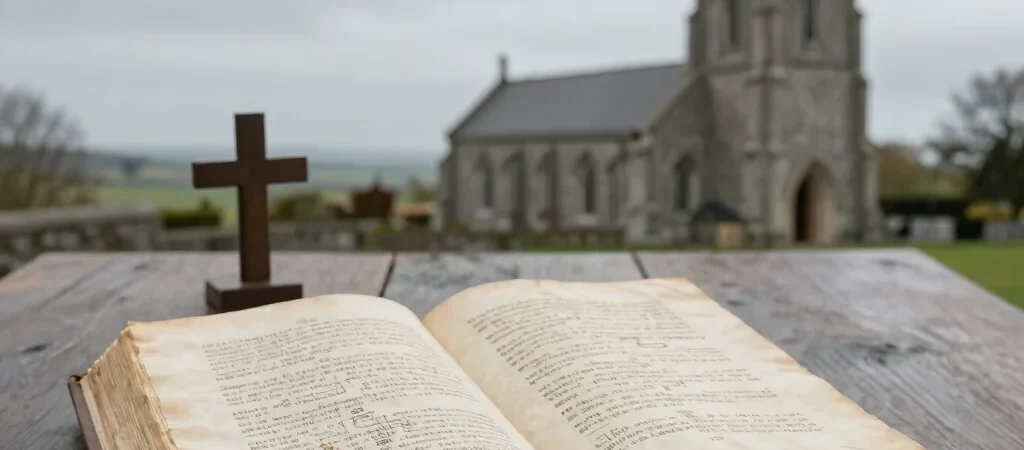
St Patrick is often remembered through stories told long after his lifetime. To meet him as a historical figure, begin instead with the words attributed to him: the Confessio and the Letter to the soldiers of Coroticus. They are not a complete biography, but they bring his concerns and convictions into sharper focus.
A voice in his own words
In the Confessio, Patrick describes being taken captive to Ireland as a young man, working as a herdsman, and later returning to the island. His account is personal rather than polished: he writes about hardship, faith, and the way he understood his calling. It gives readers a source to consider, not a reason to treat every later detail of his life as settled fact.
Faith amid conflict
The Letter to the soldiers of Coroticus has a different urgency. Patrick condemns a raid in which newly baptized Christians were killed and others carried into captivity. Read alongside the Confessio, it shows a Christian leader addressing violence and the treatment of people in his care, not simply serving as a figure in a conversion story.
Let the sources set limits
These texts survive through medieval manuscript transmission, and they do not answer every question readers may bring to them. That uncertainty is part of reading history responsibly. Start with what Patrick says, notice what the texts leave unsaid, and keep later traditions in view without confusing them with his own testimony.
A closer reading does not diminish Patrick’s place in Irish Christian history. It gives that place more depth: one person’s testimony, written amid danger and conviction, rather than a life reduced to a familiar emblem.